Beach Vacation Packing List (with a Kids Version)
For a beach vacation, pack two swimsuits per person, a cover-up, sandals, light clothes for the evenings, broad spectrum sunscreen, a sun hat and sunglasses, beach towels if your hotel or rental does not supply them, a beach bag, a waterproof phone case, your ID and cards, and a small first aid kit. Traveling with kids? Add the kids list further down: swim diapers, rash guards, kids' sunglasses, sand toys, snacks and shade for the youngest.
The short version: swimsuits (2 each), cover-up, sandals, sun hat, sunglasses, sunscreen, lip balm with SPF, after-sun gel, beach towels, beach bag, water bottles, waterproof phone case, power bank, ID, cards, medicines and a first aid kit. For kids: swimsuits and rash guards, swim diapers, kids' sunglasses and hats, sand toys, snacks and a life jacket for small children and weak swimmers.
The beach vacation packing list, by category
Copy the lists below into your notes or a packing app and cross off what you do not need. They are written for a week at the beach. For two or three nights, start from our weekend trip packing list, which has a short beach add-on.
Clothes
- T-shirts or tank tops, one per day
- Shorts, 3 or 4 pairs
- A light long-sleeved shirt, for sun and evening breezes
- Underwear, one per day plus a spare
- Sleepwear
- One or two outfits for dinners out
- A sweater or light jacket for evenings and air-conditioned restaurants
- A rain jacket, if the forecast shows showers
- Sandals or flip-flops, plus one pair of closed shoes for walking
Beach days are mostly spent in a swimsuit and a cover-up, so most people pack more everyday clothes than they wear. Count outfits for the evenings and the travel days, not for the hours on the sand.
Swim
- Swimsuits, 2 per person, so one can dry while you wear the other
- A cover-up, sarong or light shirt to wear over the swimsuit
- A rash guard or swim shirt, if you burn easily or plan to snorkel
- Water shoes, for rocky beaches, reefs or hot sand
- Goggles or snorkel gear, if you will use them often (renting is an option)
- A plastic or wet bag for wet swimsuits on the last day
Sun protection
- Broad spectrum sunscreen, SPF 15 or higher, water resistant
- Lip balm with SPF
- A hat with a brim all the way around
- Sunglasses that block UVA and UVB
- Aloe vera gel or after-sun lotion
- A beach umbrella or sun shelter, if your rental does not have one
The FDA recommends broad spectrum sunscreens with an SPF of 15 or higher, reapplied at least every two hours, and more often if you are sweating or swimming. Broad spectrum means the sunscreen protects against both UVA and UVB radiation, and not every sunscreen does, so check the label. The same FDA page says there is no such thing as waterproof sunscreen: products labeled water resistant must say whether they stay effective for 40 or 80 minutes of swimming or sweating.
Pack more sunscreen than you think. The FDA says an average-sized adult or child needs at least one ounce, about a shot glass, to cover the body from head to toe, and you put it on again every couple of hours. The CDC adds a hat with a brim all the way around and sunglasses that block both UVA and UVB rays, and notes that UV rays reflect off surfaces like water and sand. The AAP adds that beach umbrellas do not offer enough UV protection, so you still need sunscreen in the shade.
Flying with sunscreen: in a carry-on, TSA allows sunscreen in containers of 3.4 oz (100 ml) or less, inside the quart-sized liquids bag. Larger bottles go in a checked bag, where the FAA limits toiletries, including aerosols like spray sunscreen, to 2 L (68 fluid ounces) per person and 500 ml (17 fluid ounces) per container. If you only bring a carry-on, pack a small bottle for the first day and buy a big one when you arrive.
Reefs: if you will swim near coral, NOAA says certain chemical UV filters in sunscreen can harm aquatic life, including corals, and that mineral sunscreen, which does not use (chemical) UV filters, is considered a better option because there are less effects to aquatic organisms. NOAA also suggests UV protective clothing such as sun shirts.
Toiletries
- Toothbrush and toothpaste
- Deodorant
- Shampoo and conditioner
- Leave-in conditioner or detangler
- Hairbrush, hair ties and a clip
- Moisturizer
- Razor
- Contact lenses and solution, or glasses
- Makeup you actually wear on vacation, usually less than at home
For how to fit liquids in a carry-on, our carry-on packing list covers the liquids bag in detail.
Beach gear
- Beach towels, one per person (check if your hotel or rental supplies them)
- A beach bag or tote
- Reusable water bottles
- A small cooler or insulated bag for drinks and snacks
- Beach chairs or a blanket, if not supplied
- A waterproof phone case or dry bag
- A book, cards or a speaker
- A zip bag for keys and cards
- Snorkel gear, a boogie board or other toys you already own
Documents and tech
- Driver's license or passport
- Credit or debit cards and some cash, for beach parking, rentals and snack stands
- Hotel or rental confirmation, saved on your phone
- Flight or train tickets
- Health insurance card
- Phone and charger
- A power bank (in your carry-on if you fly: TSA says power banks with a lithium ion battery must be packed in carry-on bags)
- Headphones
- A camera or action camera, if you use one
Going to a beach abroad, like Mexico, the Caribbean or southern Europe? Add the passport, a plug adapter and the other items in our international travel packing list, and check which plug the country uses.
Health and first aid
- Prescription medicines, with a few extra days' supply
- Pain relievers
- A small first aid kit: bandages, antiseptic wipes, tweezers
- Insect repellent
- Motion sickness medicine, if you are taking a boat trip
- Antihistamines or anything else you use regularly
- Hand sanitizer
What goes in the beach day bag
The suitcase list gets you to the beach. This shorter list is what you carry from the room to the sand each morning:
- Sunscreen and lip balm with SPF
- Hats and sunglasses
- Towels
- Water bottles, filled
- Snacks
- Waterproof phone case, keys and a card in a zip bag
- A cover-up or dry shirt for the walk back
- A plastic bag for wet swimsuits and trash
The kids version: extra items for kids and toddlers
Kids need the same categories as adults, plus a few extras. Add these to the family list.
All kids
- Swimsuits, 2 or 3 per child, since kids swim more and change more
- Rash guards or swim shirts
- A hat with a brim all the way around, one per child
- Kids' sunglasses with UV protection
- Sunscreen they will not fight you on, like a stick for faces
- Water shoes or sandals
- Sand toys: bucket, spade and molds
- Snacks and refillable water bottles
- A change of dry clothes for the walk back
- Something for rainy afternoons: books, cards, a tablet and headphones
- A life jacket for small children and kids who are not strong swimmers
The American Academy of Pediatrics (AAP) recommends sunglasses with at least 99% UV protection, in youth sizes for children, a hat with an all-around 3-inch brim, and tightly woven clothing. It also says to reapply sunscreen every 2 hours and after swimming, sweating or drying off with a towel.
On the beach itself, the AAP's beach safety advice for families (linked above) cites the Red Cross: small children and those without strong swimming skills should wear a life jacket in or near the water. It also recommends a "water watcher": one adult whose only job is watching the swimmers. It says a hole your child digs in the sand should never be deeper than their own knee, and that the sand's surface can reach 100° F (38° C) on hot days, so pack water shoes or sandals. Plenty of water and shade breaks help kids avoid overheating.
Babies (under 1)
- Swim diapers, enough for every swim, plus regular diapers
- Baby wipes and a changing pad
- Lightweight long-sleeved clothes and a wide-brimmed hat
- A pop-up sun shelter or a stroller with a canopy
- A baby carrier for sand, where strollers get stuck
- Bottles, formula or baby food, and a bib
- A cooler bag for milk
For babies younger than 6 months, the AAP says to keep them out of direct sunlight, in shade under a tree, an umbrella or the stroller canopy, and to use sunscreen on small areas such as the face only if protective clothing and shade are not available. The FDA says sunscreen is not recommended for infants under six months old and to ask a doctor before using it on them. So for a young baby, the shelter and the clothes on this list matter more than the sunscreen.
Flying with a baby? TSA allows formula, breast milk, toddler drinks and baby food in quantities over 3.4 oz (100 ml) in your carry-on. They do not need to fit in the quart-sized bag, but tell the TSA officer at the start of screening. Ice packs are allowed too.
Toddlers and preschoolers
- Swim diapers or training pants, if they are not reliably dry yet
- A life jacket that fits
- Sippy cups and lots of snacks
- A familiar toy or blanket for naps
- A portable potty seat, if you use one at home
- A small pop-up shelter for naps on the sand
Older kids
- Goggles and a snorkel mask that fits
- Their own beach bag, so they carry their own towel and water
- A boogie board or skimboard, if you have one
- A book or game for the flight or drive
Keep the beach list in Luggy
A family beach list is long, and the same list comes back every summer. Luggy is a packing list app for iPhone that keeps it as one trip: a name, destination and dates, with the packing list grouped by category. Luggy does not build the list for you from the destination or the weather. You add items from a ready-made list of 258 items in 25 categories, including Beach & Outdoor, Baby & Kids, Toiletries and Health & Safety, or type your own.
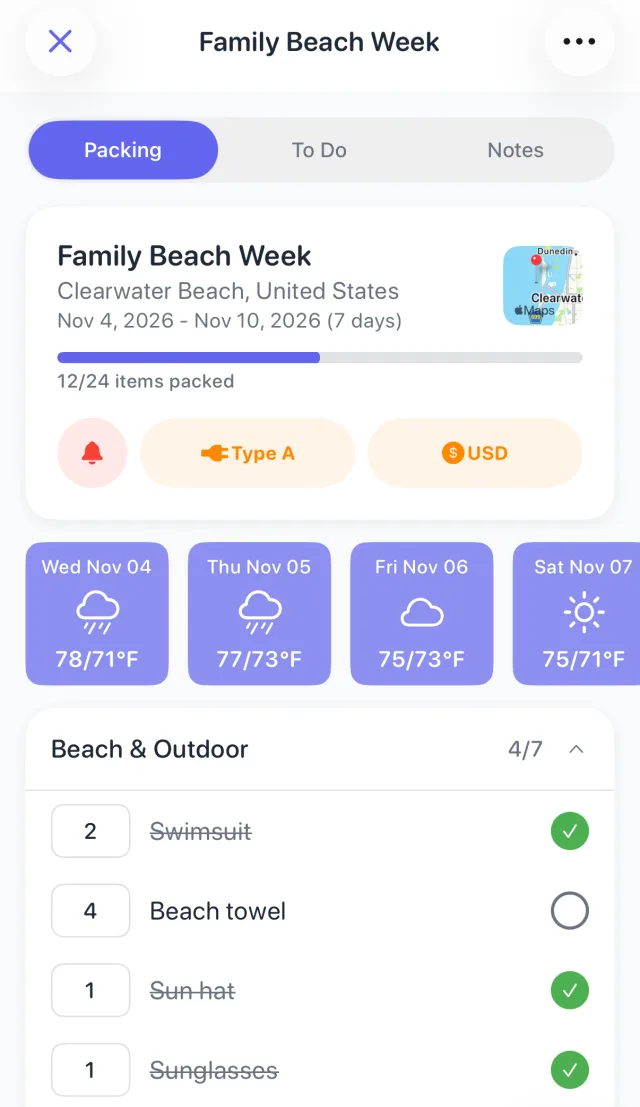
Luggy's weather forecast on the trip screen covers the next several days, so it is useful in the last few days before you leave, not when you book. You set a quantity for each item, like 4 beach towels or 12 swim diapers, and check items off as they go in the bag.
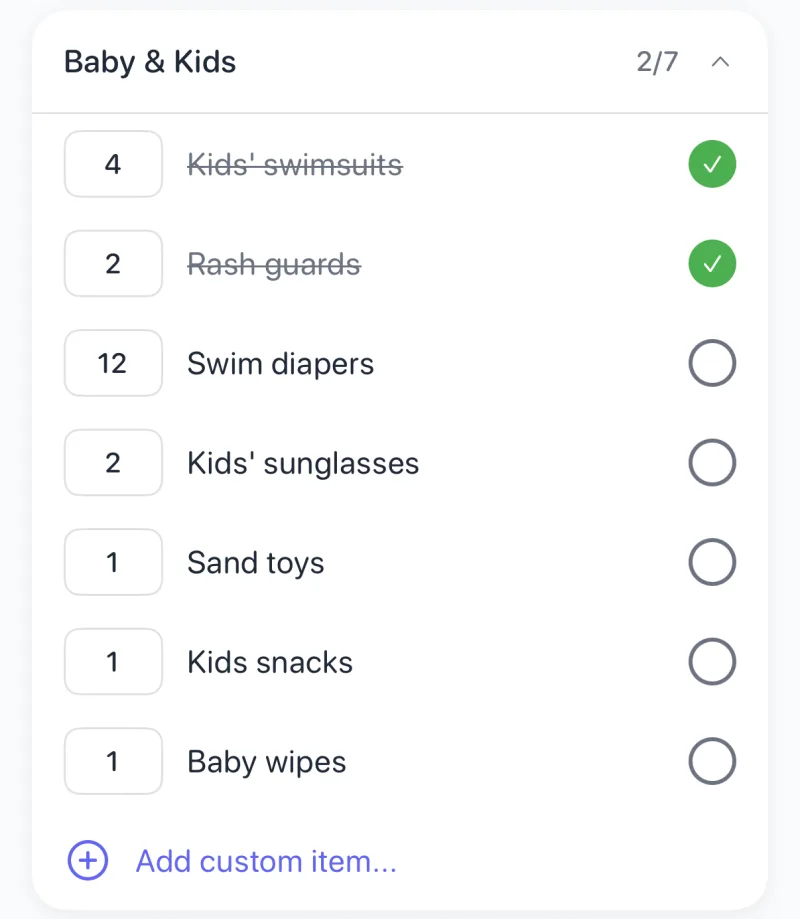
For kids, the free version works like this: add the built-in Baby & Kids category (diapers, baby wipes, toys, kids snacks, sippy cups and more), then type your own items into it at the bottom of the category, like kids' swimsuits, rash guards, swim diapers or sand toys. Everything lives on the same family trip, so the kids' things are one category on the list. Free Luggy has one trip at a time and the built-in categories. If you want a separate category per child, you need Luggy+, which adds custom categories.
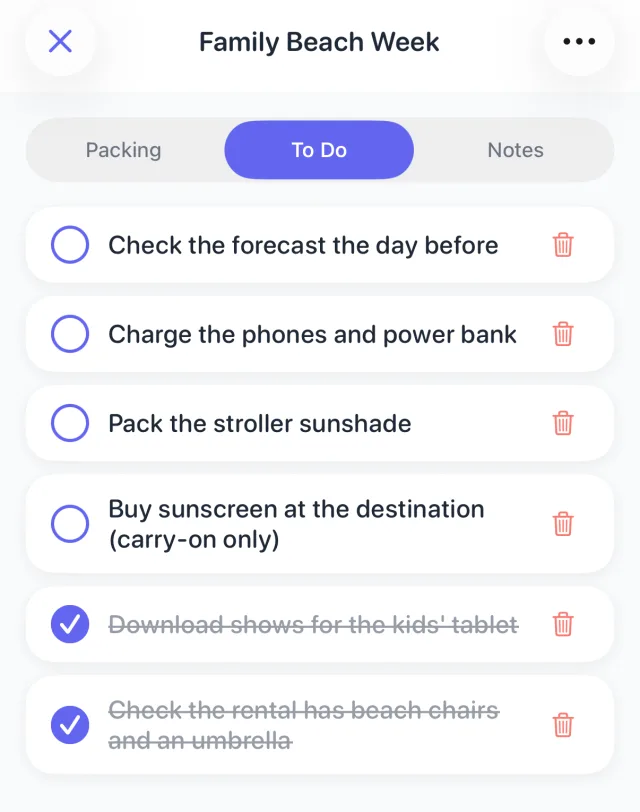
Each trip also has a to-do list for the things to do before you leave, like checking what the rental supplies or buying sunscreen when you land.
Luggy is free to download. The free version covers one trip with the packing list, quantities, check-offs, your own items, a to-do list, notes and the destination's plug type, currency and weather. Luggy+ adds unlimited trips, reusable custom lists, copying a past trip (handy for next summer's beach week), custom categories, packing reminders and PDF export.
Luggy: packing list app
Build a packing list for each trip from 250+ ready-made items in 25 categories, check things off as you pack, keep a pre-trip to-do list, and see your destination's plug type, currency and weather. Free to download.

Last check before you leave
- Swimsuits for everyone, including the one drying on the balcony at home.
- Sunscreen, in the checked bag or in small bottles in the liquids bag.
- Hats and sunglasses, one per person.
- Medicines and the first aid kit.
- Chargers and the power bank, in your carry-on.
- The kids' extras: swim diapers, life jacket, snacks, the nap toy.
- The forecast one last time.
Our list of commonly forgotten items has more on the things people leave behind, and the before traveling checklist covers the jobs to do before an international trip.
Common questions
What should I pack for a beach vacation?
Two swimsuits per person, a cover-up, sandals, light clothes for evenings, broad spectrum sunscreen, a hat with a brim all the way around, sunglasses, beach towels if your rental does not supply them, a beach bag, a waterproof phone case, your documents and a small first aid kit.
How many swimsuits should I bring to the beach?
Two per person is enough for most trips, so one can dry while you wear the other. Kids who swim several times a day can use two or three.
Can I bring sunscreen in my carry-on?
In the US, yes, in containers of 3.4 oz (100 ml) or less, inside your quart-sized liquids bag. Larger bottles go in a checked bag. Rules can change, so check TSA's page before you fly.
What do I need for a baby at the beach?
Shade (a pop-up shelter or a stroller canopy), lightweight clothes that cover arms and legs, a wide-brimmed hat, swim diapers, wipes and plenty to drink. For babies under 6 months, the AAP says to keep them out of direct sunlight, and the FDA says sunscreen is not recommended for them, so ask your pediatrician.