International Travel Packing List: The Complete Checklist
Packing for a trip abroad is mostly the same as packing for any trip, plus a handful of things that are hard or impossible to fix once you land: a passport that is about to expire, the wrong plug, a bank card that gets blocked on day one. This checklist covers both.
The short version: check your passport's expiry date first. Then pack by category: documents, money, electronics (with the right plug adapter), health, clothes, toiletries and a small carry-on kit. Keep passports, medicines, chargers and power banks in your carry-on. Do a last check against the list the night before.
Before you pack: the international-only checks
These are the items that make an international trip different. Do them a few weeks out, not the night before.
- Passport validity. Many countries want your passport to be valid for some time after you leave. The EU, for example, asks visitors from outside the EU for a passport that is valid for at least 3 months after the date you intend to leave and issued within the last 10 years. Check the rule for your destination on its official site.
- Visa or travel authorization. Some destinations need one before you fly. Check early, because some take weeks.
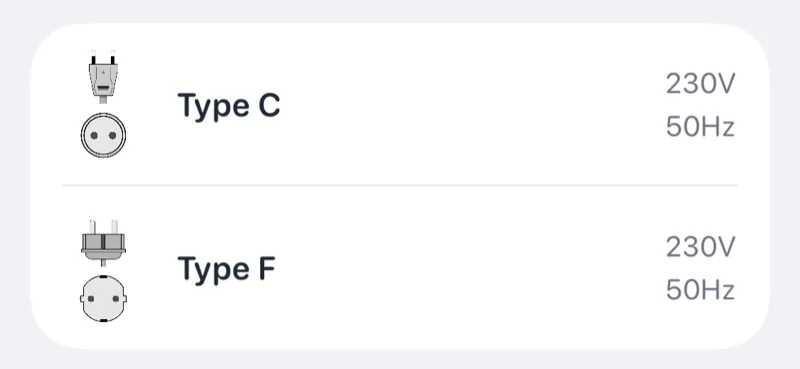
- Plug type. Countries use different plug shapes and voltages. Find out which plug your destination uses and pack an adapter that fits it.
- Money. Tell your bank and card provider where you are going, and know the local currency and roughly what it is worth.
- Phone plan. Decide on roaming, a local SIM or an eSIM before you go, so your maps work when you land.
Documents
- Passport (and visa, if needed)
- Flight tickets or boarding passes
- Hotel or accommodation confirmations
- Travel insurance details
- Driver's license (and an international driving permit if you plan to drive and your destination requires one)
- Credit and debit cards, plus a backup card kept in a different bag
- Some local cash for the first day
- Copies of your passport and key documents, on paper and on your phone
- Emergency contacts and your accommodation's address, written down
The CDC's Pack Smart list recommends bringing copies of your passport and travel documents, a contact card for someone at home, your lodging information and your health insurance details, ideally both printed and digital.
Electronics
- Phone and charger
- Plug adapter for your destination (or a universal adapter)
- Power bank
- Headphones
- Laptop or tablet and chargers, if you need them
- USB cables, and a short extension cord or multi-port charger so one adapter can charge several things
- Camera and charger, memory cards
An adapter changes the plug shape. It does not change the voltage. Many phone and laptop chargers accept a wide voltage range (look for "100-240V" on the charger), but some hair dryers and straighteners do not.
Power banks go in your carry-on. The FAA says spare lithium batteries, including power banks, must be carried in carry-on baggage only, and must come out of your bag if it gets checked at the gate.
Health and medicines
- Prescription medicines, in their original containers, for the whole trip plus a few extra days
- Copies of prescriptions
- Pain and fever relievers
- Motion sickness tablets, if you need them
- Small first-aid kit with plasters (band-aids)
- Hand sanitizer
- Glasses, contact lenses and solution
- Insect repellent and sunscreen, depending on the destination
The CDC suggests carrying prescriptions preferably in their original bottles and notes that some countries restrict which medicines you can bring, so check before you travel if you take anything strong.
Clothes
Pack for the number of days, then cut. Most trips need fewer clothes than you think, especially if you can do laundry once.
- Tops: one per day for short trips, or about 5 to 7 for a week or longer
- Trousers, jeans or skirts: 2 to 3
- Underwear and socks: one per day, plus one spare
- Sleepwear
- A warm layer (sweater or fleece)
- A rain jacket or light waterproof
- One smarter outfit for a nice dinner
- Swimwear, if there is any chance of a pool or beach
- Comfortable walking shoes, plus one other pair at most
Check the weather for your destination in the week before you leave, then adjust the warm layers and rain gear.
Toiletries
- Toothbrush and toothpaste
- Deodorant
- Shampoo and conditioner (or buy them there)
- Skincare and sunscreen
- Razor
- Hairbrush or comb
- Any makeup you use
If you fly with only a carry-on from the US, liquids, gels and creams go in a quart-sized bag, in containers of 3.4 ounces (100 ml) or less. Larger containers go in checked baggage. Rules at other countries' airports can differ, so check your departure airport too.
Your carry-on kit
Whatever you check in can be delayed. Keep these with you:
- Passport, tickets and cards
- Medicines
- Phone, charger and power bank
- A change of underwear and a T-shirt
- Toothbrush and travel-size toothpaste
- Headphones, an eye mask and earplugs for a long flight
- An empty water bottle to fill after security
- A pen, for arrival forms
Make the list once, then reuse it
The easiest way to stop forgetting things is to stop starting from a blank page. Keep one master list, copy it for each trip, then delete what you do not need and add what the destination calls for.
You can do this on paper or in a notes app, but a packing app makes the checking-off part easier. In Luggy, you create a trip with its destination and dates, then add items from a built-in list of 258 travel items in 25 categories, or type your own. You set quantities, tick items off as they go in the bag, and the progress bar shows how much is left.
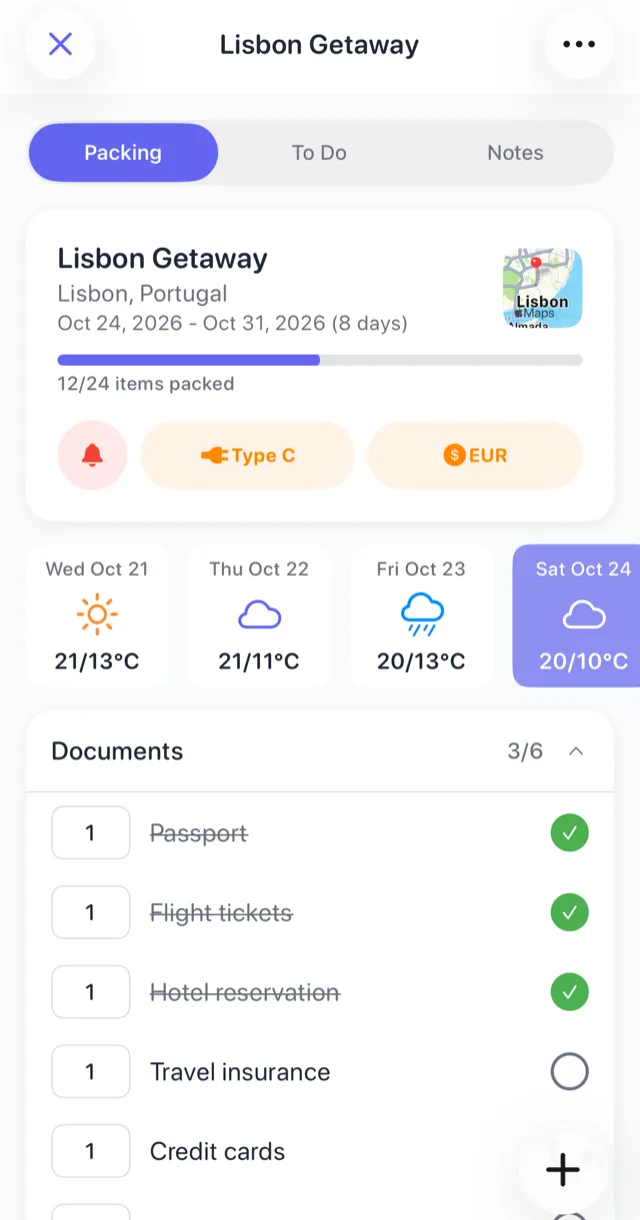
For an international trip, the trip screen also shows the destination's plug type and currency, and a weather forecast once your dates are close.
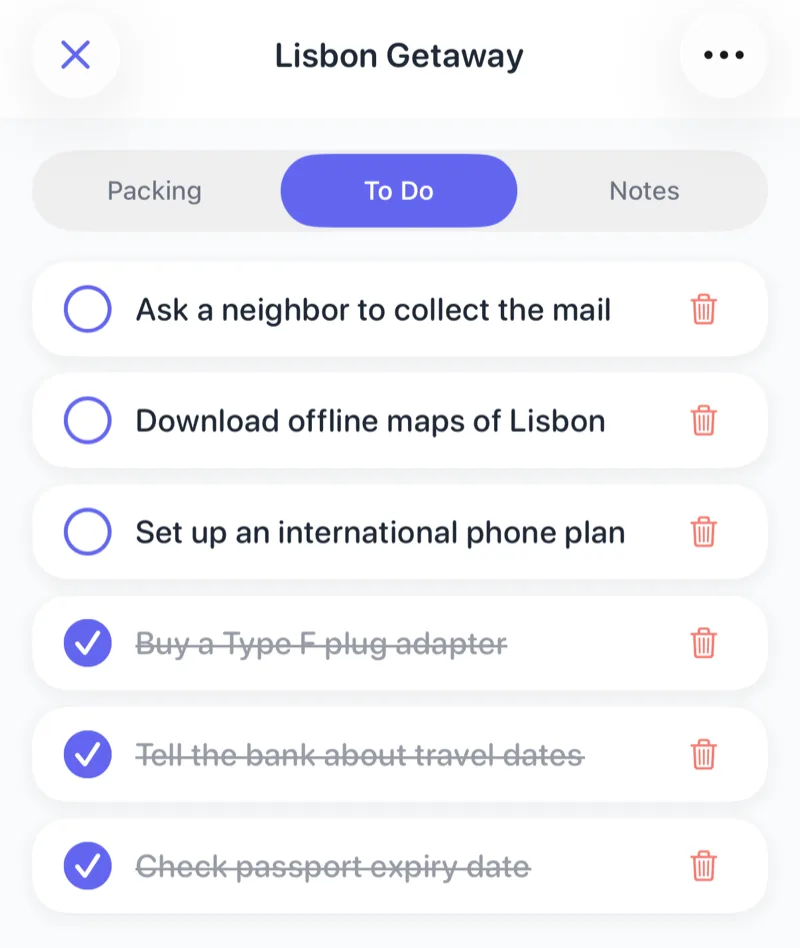
The to-do list on the same trip is where the pre-trip jobs go: checking the passport date, telling the bank, sorting out a phone plan.
Luggy is free to download and the free version covers one trip at a time. Luggy+ adds unlimited trips, copying a past trip, packing reminders, reusable custom lists and PDF export.
Luggy: packing list app
Build a packing list for each trip from 250+ ready-made items in 25 categories, check things off as you pack, keep a pre-trip to-do list, and see your destination's plug type, currency and weather. Free to download.

Common questions
What should I not forget when traveling internationally?
Your passport (check the expiry date), any visa you need, a plug adapter for your destination, your bank cards and some local cash, your medicines in your carry-on, and copies of your important documents. Those are the hardest things to replace once you have left.
How many outfits should I pack for a week abroad?
For a week, 5 to 7 tops, 2 to 3 bottoms, one warm layer, a rain layer and one smarter outfit are enough for most trips. Pack underwear and socks for every day plus a spare. If you can do laundry, pack less.
Can I put a power bank in my checked bag?
No. In the US, the FAA requires spare lithium batteries, including power banks, to be carried in your carry-on only.
Do I need a plug adapter or a voltage converter?
Many phone, laptop and camera chargers only need an adapter, because they accept 100 to 240 volts. Check the label on the charger. Single-voltage devices like some hair dryers need a converter, or you can leave them at home and use the one at your hotel.