Road Trip Packing List: Car Kit, Snacks and Essentials
For a road trip, pack the car first: driver's license, registration and insurance card, a phone charger for the car, jumper cables, a flashlight, a first aid kit, a tire pressure gauge, water and some nonperishable food. Then pack the people: snacks and drinks in reach, a pillow and blanket, layers, a small bag of toiletries for overnight stops, and offline maps and music. Traveling with kids, a pet or into winter weather? There is a short add-on list for each further down, plus a car check to do before you leave.
The short version: license, registration, insurance card, roadside assistance number, car charger, power bank, jumper cables, flashlight, first aid kit, tire pressure gauge, spare tire and jack, water, snacks, a cooler, trash bags, wet wipes, a pillow, a blanket, sunglasses, layers and an overnight bag. Add the kids, pets or winter list if you need it.
The road trip packing list, by category
Copy the lists below into your notes or a packing app and cross off what you do not need. They are written for a trip of a few days to a week by car. If you are only away for two or three nights, our weekend trip packing list has the short version of the clothes and toiletries.
Car documents
- Driver's license, for every person who will drive
- Vehicle registration
- Insurance card, paper or in the insurer's app
- Roadside assistance number or membership card
- Rental agreement, if it is a rental car
- Cards and some cash, for tolls and parking
- Hotel confirmations, saved on your phone
Driving into Canada or Mexico? That is an international trip: add passports and the items in our international travel packing list, and check our before traveling checklist for the jobs to do weeks ahead, like checking whether your license is valid there.
Car emergency kit
This kit lives in the car, so you pack it once and check it before each long drive. NHTSA's summer driving tips note that even a well-maintained vehicle can break down and recommend an emergency roadside kit with these contents:
- Cell phone and charger
- First aid kit, including a tourniquet
- Flashlight
- Flares and a white flag
- Jumper cables
- Tire pressure gauge
- Jack (and ground mat) for changing a tire
- Work gloves and a change of clothes
- Basic repair tools and some duct tape, for temporarily patching a hose leak
- Water and paper towels for cleaning up
- Nonperishable food, drinking water and medicines
- Extra windshield washer fluid
- Maps
- Emergency blankets, towels and coats
The same page says to make sure you have a spare tire and car jack kit. Ready.gov's car safety page lists a few more automobile extras for being stranded: a reflective triangle as an alternative to flares, an ice scraper, a blanket, and cat litter or sand for better tire traction.
No paper map? Download offline maps for the whole route before you go, in case you lose signal.
Comfort for the drive
- A small pillow and a blanket for passengers
- Sunglasses, one pair for each driver
- Lip balm and hand lotion, because car air is dry
- Tissues, wet wipes and a few trash bags
- A phone mount, so the driver does not hold the phone
- Slip-on shoes for rest stops
Food and drinks
- Refillable water bottles, one per person, plus a large jug
- A cooler or insulated bag, with ice packs
- Snacks that are not messy: trail mix, granola bars, crackers, nuts, dried fruit
- Fruit that travels well, like apples and clementines
- Sandwiches for the first day, so the first meal stop is your choice
- Paper towels and napkins
Keep a day's snacks in reach and the rest in the trunk.
Clothes
- Comfortable clothes for driving days: soft pants, a T-shirt and a hoodie
- Tops, one per day, and bottoms, one for every two or three days
- Underwear and socks, one per day plus a spare
- Sleepwear
- A warm layer and a rain jacket, since one day's drive can cross very different weather
- Walking shoes, plus sandals or boots for the trip
With several overnight stops, pack one small bag with tomorrow's clothes, sleepwear and toiletries, and leave the big bags in the car.
Toiletries and health
- Toothbrush, toothpaste and deodorant
- Hairbrush, skincare, razor, and contacts or glasses
- Shampoo, if your stays do not provide it
- Sunscreen
- Prescription medicines, with a few extra days' supply
- Pain relievers and motion sickness medicine
- Hand sanitizer
Tech and entertainment
- A car phone charger, with a cable long enough to reach the back seat
- A power bank, charged
- Headphones for every passenger
- Downloaded playlists, podcasts or audiobooks
- Offline maps of the route and the destination
The kids version
Kids need the same categories, plus these extras:
- Car seats or booster seats that fit each child's age and size
- An activity bag per child: books, coloring books, travel games
- A tablet and headphones, with shows downloaded at home
- Snacks they like and spill-proof cups
- A change of clothes in reach, not in the trunk
- A familiar blanket or toy
- Motion sickness bags, for kids who get carsick
- Diapers, wipes and a changing pad for babies
NHTSA's summer driving tips say all children under age 13 should always ride correctly buckled in the back seat, in a car seat or booster seat that fits their age and size. NHTSA offers a free car seat inspection station locator if you want yours checked before a long trip.
Two more points from the same page: never leave children alone in the car, since a child's body temperature rises three to five times faster than an adult's, and always check the back seat before you get out. Plan stops every couple of hours so kids can run around.
The pets version
If the dog or cat comes along, give them their own list:
- Leash and collar with ID tags, plus a temporary tag with your cell number and destination
- A crate or carrier, or a harness that attaches to a seat belt
- Food and treats, enough for the trip plus a day
- Portable bowls and plenty of water
- Waste bags and paper towels
- Medications and vaccination records, including rabies
- Bedding and a favorite toy
The ASPCA's travel safety tips recommend keeping pets in a well-ventilated crate or carrier secured so it cannot slide, or in the back seat in a harness attached to a seat belt, never with their head out the window. They suggest a light meal three to four hours before you leave and no feeding in the moving car. If you cross state lines, the ASPCA says to bring the rabies vaccination record and ask your vet whether a health certificate is needed.
Most important: never leave a pet alone in a parked car. The ASPCA says a parked car can quickly become a furnace on a hot day, even with the windows open, and act like a refrigerator in cold weather. Book pet-friendly hotels before you go, because they fill up on holiday weekends.
The winter driving add-on
Driving to family for Thanksgiving or the holidays, or heading to the mountains? Add these to the car kit. NHTSA's winter driving tips suggest carrying:
- A snow shovel, broom and ice scraper
- Sand or kitty litter for traction if the car gets stuck
- Jumper cables, a flashlight and warning devices, like flares or emergency markers
- A first aid kit and any personal medicines
- Blankets, bottled water and nonperishable food
- A cell phone and a car charger
For the people, add a warm coat, gloves, a hat, wool socks, winter boots and hand warmers, and pack chains if your route requires them.
NHTSA's winter page has a tip for parents: heavy coats can interfere with the harness fit of a car seat. Dress children in thin, warm layers, and put the coat or a blanket over them after the harness is snug.
Keep the gas tank close to full, or an electric car charged, since cold can reduce its range. If you get stuck, NHTSA says to stay with the vehicle, make it visible, clear snow from the exhaust pipe and run the engine only long enough to stay warm, to avoid carbon monoxide poisoning.
The pre-departure car check
Do this a few days before you leave, so there is time to fix anything. The checks come from NHTSA's summer and winter driving tips:
- Recalls. Enter your VIN or license plate in NHTSA's recalls look-up to see if your car has an unrepaired safety issue. Recall repairs are free.
- Tire pressure. Fill each tire to the pressure on the label on the driver's door frame or in the owner's manual, not the number on the tire, which is the maximum. Check when the tires are cold, at least three hours after driving.
- Tread and the spare. Look for cuts, bulges and uneven wear. Tread should be at least 2/32 of an inch: put a penny in the tread with Lincoln's head upside down, and if you can see the top of his head, it is time for new tires. Check the spare too.
- Oil and fluids. Check the oil, and if an oil change is almost due, do it before the trip. Check brake fluid, coolant and washer fluid.
- Battery. Have a mechanic check the battery and charging system, especially before winter.
- Lights. Headlights, brake lights, turn signals and hazard lights.
- Wipers. Replace worn blades and fill up the washer fluid.
- Belts and hoses. Look for cracks, bulges or cuts.
- The route. Check the weather, road conditions and traffic, and tell someone your route and when you expect to arrive.
On the road, NHTSA suggests stopping to stretch and eat, and switching drivers or resting if you feel drowsy.
Keep the road trip list in Luggy
A road trip list mixes the car kit, the snacks, the kids' bag and the dog's bowls. Luggy is a packing list app for iPhone that keeps all of it as one trip, with a name, destination and dates, and the list grouped by category. You add items from a ready-made list of 258 items in 25 categories, including Food & Snacks, Health & Safety, Baby & Kids, Pets and Winter Travel, or type your own. Luggy does not build the list for you from the trip type: you pick what goes on it.
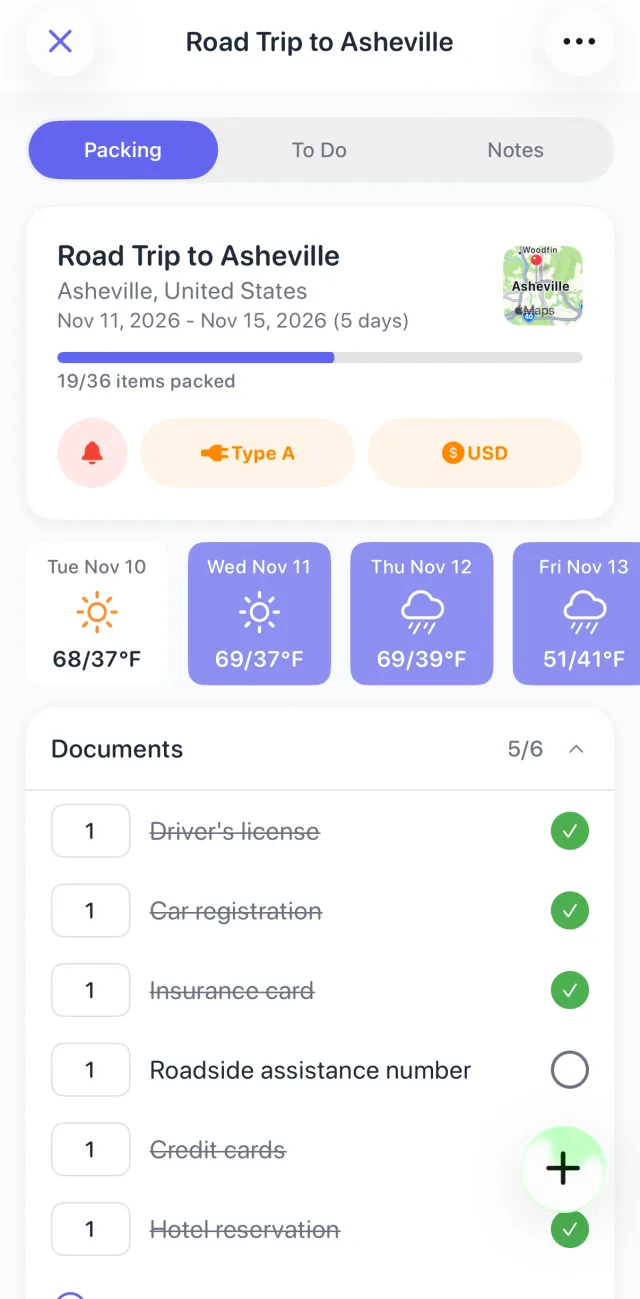
The weather forecast covers the next several days, so just before you leave it shows your drive days highlighted: time to decide on the ice scraper.
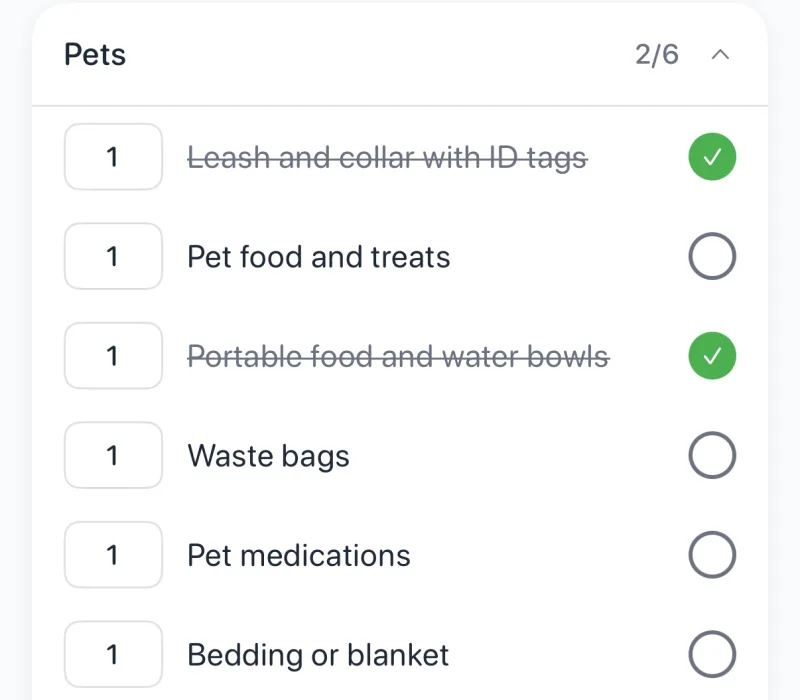
There is no built-in Car category, so type the car kit into one of the built-in categories, like Miscellaneous, with the Add custom item row at the bottom of each category. The Pets category already has the basics: leash and collar with ID tags, food and treats, portable bowls, medications, waste bags, a carrier and bedding. You set a quantity for each item, like 4 water bottles or 8 granola bars, and check things off as they go in the car.
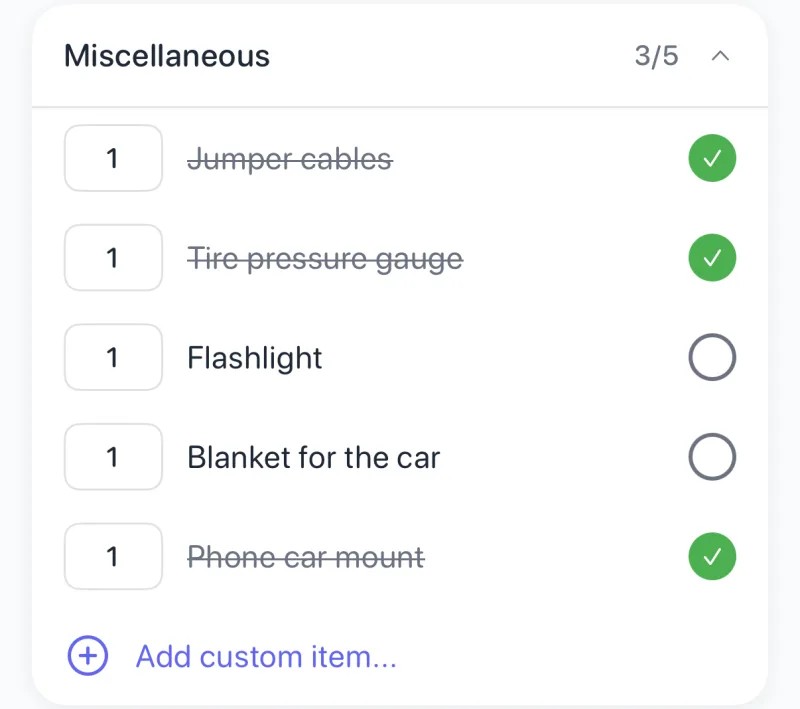
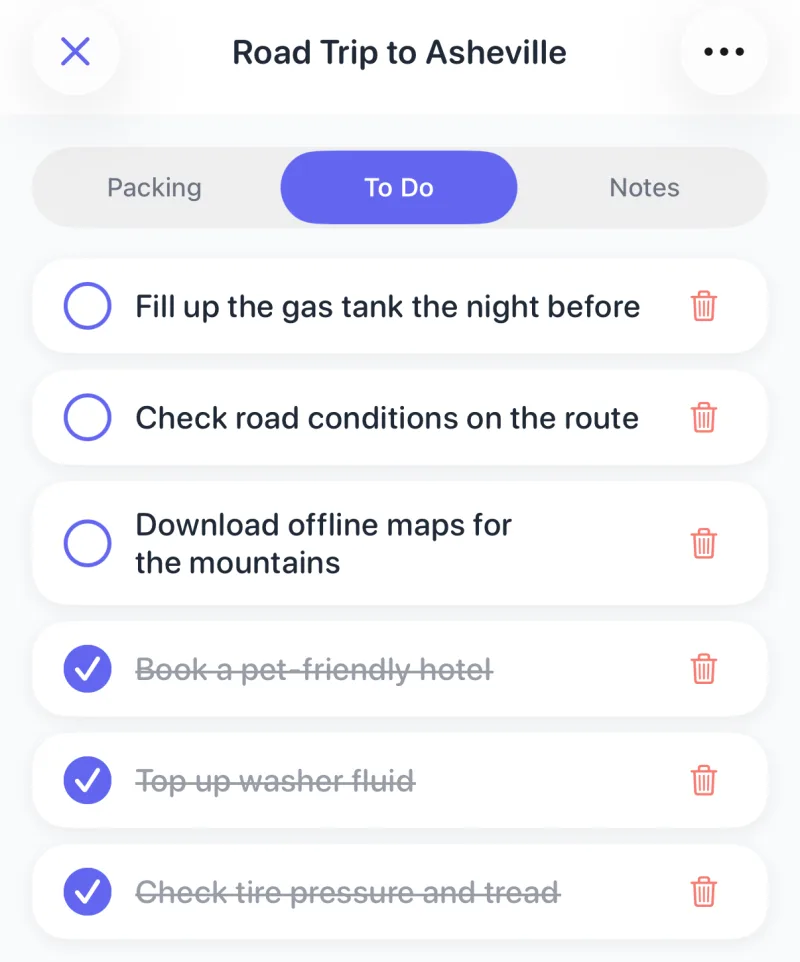
Each trip also has a to-do list for the jobs that are not things to pack, like the car check above, booking a pet-friendly hotel or downloading offline maps.
Luggy is free to download. The free version covers one trip with the packing list, quantities, check-offs, your own items, a to-do list, notes and the destination's weather, plug type and currency. Luggy+ adds unlimited trips, custom categories (so the car kit can be its own Car category), reusable custom lists, copying a past trip for next year's holiday drive, packing reminders and PDF export.
Luggy: packing list app
Build a packing list for each trip from 250+ ready-made items in 25 categories, check things off as you pack, keep a pre-trip to-do list, and see your destination's plug type, currency and weather. Free to download.

Last check before you pull out
- License, registration, insurance card and wallet.
- Phone, car charger and power bank.
- Medicines, for people and pets.
- Car seats buckled in, the pet crate or harness secured.
- The emergency kit and spare tire in the trunk.
Our list of commonly forgotten items has more on the things people leave behind, from chargers in the wall to the medicine on the counter.
Common questions
What should I pack for a road trip?
Your license, registration and insurance card, a car charger, a car emergency kit (jumper cables, flashlight, first aid kit, tire pressure gauge, spare tire and jack), water and snacks in a cooler, a pillow and blanket, layers, toiletries and offline maps. Add the kids, pets or winter extras if they apply.
What should be in a car emergency kit?
NHTSA recommends a cell phone and charger, a first aid kit, a flashlight, flares, jumper cables, a tire pressure gauge, a jack, work gloves, basic tools and duct tape, water, nonperishable food, medicines, extra washer fluid, maps and emergency blankets. For winter, add a shovel, an ice scraper and sand or kitty litter.