Cold Weather Packing List: How to Layer for a Winter City Trip
For a winter city trip, pack in three layers: a thermal base layer, a warm mid layer like a sweater or fleece, and a water-resistant winter coat on top. Add a hat, gloves or mittens and a scarf, wool socks, waterproof shoes or boots with good grip, lip balm and moisturizer, hand warmers, a small day bag and a power bank for your phone. Wear the coat and boots on the plane, and the rest fits in a carry-on.
The short version, for 4 to 5 days: 2 thermal tops and 1 or 2 thermal leggings, 2 or 3 sweaters or fleeces, 4 or 5 long-sleeved tops, 2 pairs of jeans or warm pants, 1 winter coat, a beanie, gloves or mittens, a scarf, 4 or 5 pairs of wool socks, underwear for each day, waterproof boots with grip, one pair of indoor shoes, pajamas, lip balm, moisturizer, hand warmers, a day bag, a phone charger and a power bank.
This list is for cities: museums, markets, sidewalks and dinners out. Heading to the mountains? Our ski trip packing list covers ski layers, gear and what to rent.
How cold is a December city trip?
Normal December highs and lows from NOAA's 1991 to 2020 climate normals, for three popular winter city trips: Chicago at O'Hare airport, New York at Central Park and Boston at Logan airport.
| City | High | Low |
|---|---|---|
| Chicago | 37°F (3°C) | 24°F (-4°C) |
| New York | 44°F (7°C) | 34°F (1°C) |
| Boston | 42°F (6°C) | 29°F (-2°C) |
Those are averages. A cold snap or a windy day feels much colder: the National Weather Service wind chill page explains that wind draws heat from exposed skin, so it feels colder than the thermometer says. Check the real forecast for your dates in the last week before you go, and pack for the coldest day on it.
The cold weather packing list, by layer
Layers beat one huge coat because a city day goes from a freezing sidewalk to a heated museum to a warm restaurant. You add or take off a layer instead of sweating in a parka. The National Weather Service's advice for being outside in the cold starts with exactly that: dress in layers and cover exposed skin.
Base layer
The layer against your skin keeps you warm without bulk.
- Thermal tops, 2, in merino wool or a synthetic fabric
- Thermal leggings, 1 or 2, to wear under jeans on the coldest days
- Underwear, one per day
Mid layer
- Sweaters or fleeces, 2 or 3
- Long-sleeved tops or T-shirts, one per day, to wear under the sweater
- Jeans or warm pants, 2 pairs
- A cardigan or light vest, if you run cold indoors
Outer layer
- A warm, water-resistant winter coat that covers your hips
- A packable rain jacket, only if the forecast shows rain above freezing and your coat is not waterproof
One coat is enough. You wear it every day, so bring the warmest one you own.
Hat, gloves and scarf
- A beanie or warm hat that covers your ears
- Gloves or mittens, plus thin liner gloves that work with a phone screen
- A scarf, or a neck gaiter that you can pull over your face
The NWS notes that mittens are better than gloves for avoiding frostbite. Touchscreen gloves or liners under your mittens save you from taking a hand out every time you check a map.
Socks and shoes with grip
- Wool socks, one pair per day, or one per day minus one if you can rinse a pair
- Waterproof boots or walking shoes with a deep, grippy sole
- A second pair of shoes for indoors or dinner
- Slip-on ice cleats, if the forecast shows ice and you plan to walk a lot
Wet feet get cold fast, and city sidewalks in winter mean slush at every crosswalk. Waterproof boots you have already walked in at home are the single most useful thing on this list. If you pack ice cleats, put them in the checked bag: TSA lists snow cleats as checked bags only.
Small extras for cold, dry air
- Lip balm
- Moisturizer and hand cream
- Hand warmers, a few per day for long days outside
- Tissues
- Sunglasses, for bright days and snow glare
- Your usual toiletries and medicines
Heated hotels and cold wind both dry out skin, so the moisturizer is not optional. TSA allows hand warmers in both carry-on and checked bags. Lotions and creams follow the liquids rule in a carry-on, which our toiletries packing list explains.
A day bag
- A small backpack or crossbody bag with room for a hat, gloves and a scarf when you go inside
- A water bottle
- Snacks
- A tote that folds flat, for market shopping
Pick one a size bigger than in summer: it holds your layers when the museum is warm.
Tech in the cold
- Phone and charger
- A power bank and its cable
- Headphones
Cold drains phone batteries. Apple's support page on iPhone temperatures says iPhone and iPad are designed for use between 32°F and 95°F (0°C and 35°C), and that using one in very cold conditions outside that range might temporarily shorten battery life and could make it turn off. A cold iPhone might also not charge. Battery life returns to normal once the device warms up again. In practice: keep the phone in an inside pocket, not a coat pocket or a bag, and carry the power bank. Power banks go in your carry-on: the FAA says spare lithium batteries and power banks must be carried in carry-on baggage only.
How many of each for a 4 to 5 day December trip
For four or five days in a cold city, with one bag:
- Thermal tops: 2
- Thermal leggings: 1 or 2
- Long-sleeved tops: 4 or 5
- Sweaters or fleeces: 2 or 3
- Jeans or warm pants: 2
- Winter coat: 1 (worn)
- Beanie, gloves, scarf: 1 each, plus liner gloves
- Wool socks: 4 or 5 pairs
- Underwear: one per day
- Pajamas: 1
- Boots with grip: 1 pair (worn)
- Indoor or dinner shoes: 1 pair
- Hand warmers: a few per day outside
Winter outfits repeat well, because the coat is what people see, and thermals can be rinsed in the sink and dried overnight.
Packing bulky winter clothes
Winter clothes take up space, so let your body carry the biggest ones.
- Wear the heaviest items on the plane: the coat, the boots, the thickest sweater and the scarf. On board, the coat goes on your lap or in the overhead bin.
- Roll sweaters and thermals, and put socks inside the dinner shoes.
- Use the coat pockets for the hat, gloves and a charger cable.
- Leave room to come home with: winter markets and holiday shopping fill a bag fast.
With the coat and boots on you, a week of winter clothes fits in a carry-on. Our carry-on packing list shows how to split it between the bag and the personal item.
Spending the holidays with family instead of a hotel? The holiday packing list adds gifts, a host gift and houseguest items. And for the small things that get left behind on every trip, from chargers to medicines, see our list of commonly forgotten items.
Staying safe in the cold
City trips are mostly short walks between warm buildings, but a long day outside on a bitter day can still be dangerous.
Dress for it. CDC's hypothermia prevention page says that when you go outside in winter, wear a scarf or knit mask that covers your face and mouth, a hat, mittens or gloves, a water-resistant coat, water-resistant boots and several layers of loose-fitting clothing. The NWS adds to seek shelter from the wind and to change into dry clothing as soon as you are inside if you are wet.
Know frostbite. The NWS says frostbite can happen in minutes, most often on fingers, toes, the nose and ears. CDC's frostbite page lists the signs: a white or grayish-yellow skin area, skin that feels unusually firm or waxy, and numbness. If you notice them, get into a warm room as soon as possible and warm the area in warm, not hot, water. CDC says not to use these steps in place of proper medical care.
Know hypothermia. CDC lists the warning signs in adults as shivering, exhaustion, confusion, fumbling hands, memory loss, slurred speech and drowsiness. If you notice them, CDC says to take the person's temperature, and if it is below 95°F (35°C), get medical attention immediately.
Plan the coldest day around museums and the warmest one around the long walk. The NWS suggests avoiding the coldest part of the day, typically the early morning, when you can.
Build the winter trip in Luggy
Luggy is a packing list app for iPhone. You make a trip with a destination and dates, then build its list from a ready-made list of 258 items in 25 categories, or type your own. Luggy does not write the list for you: you pick what goes on it.
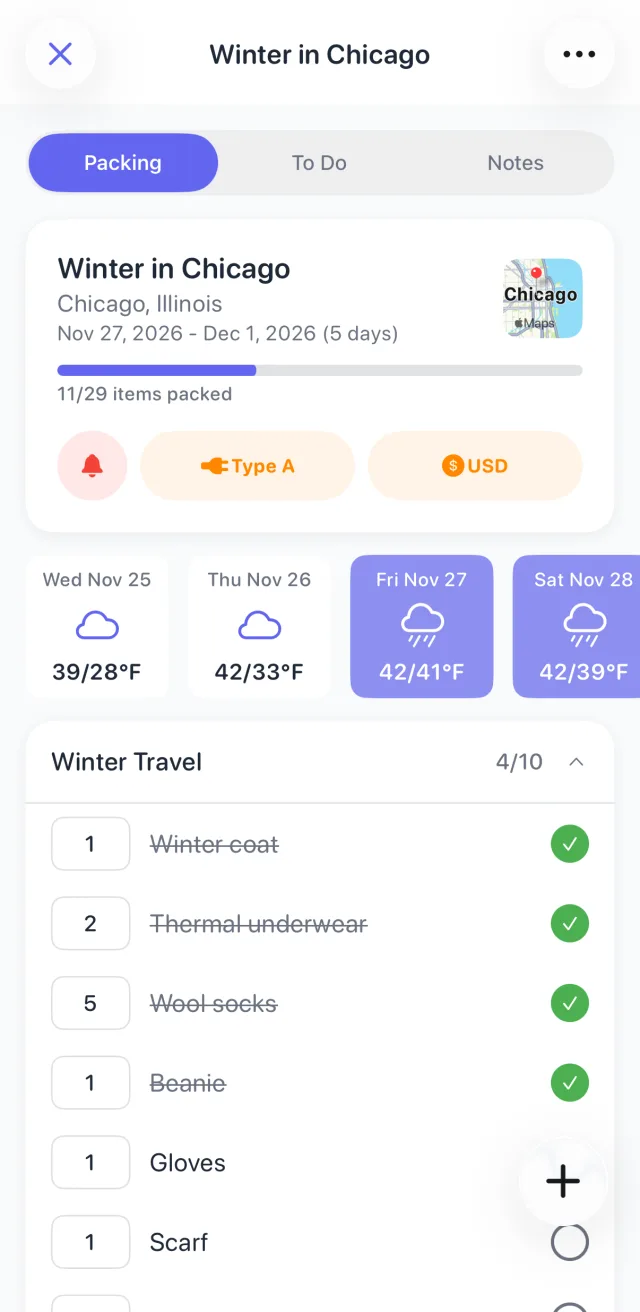
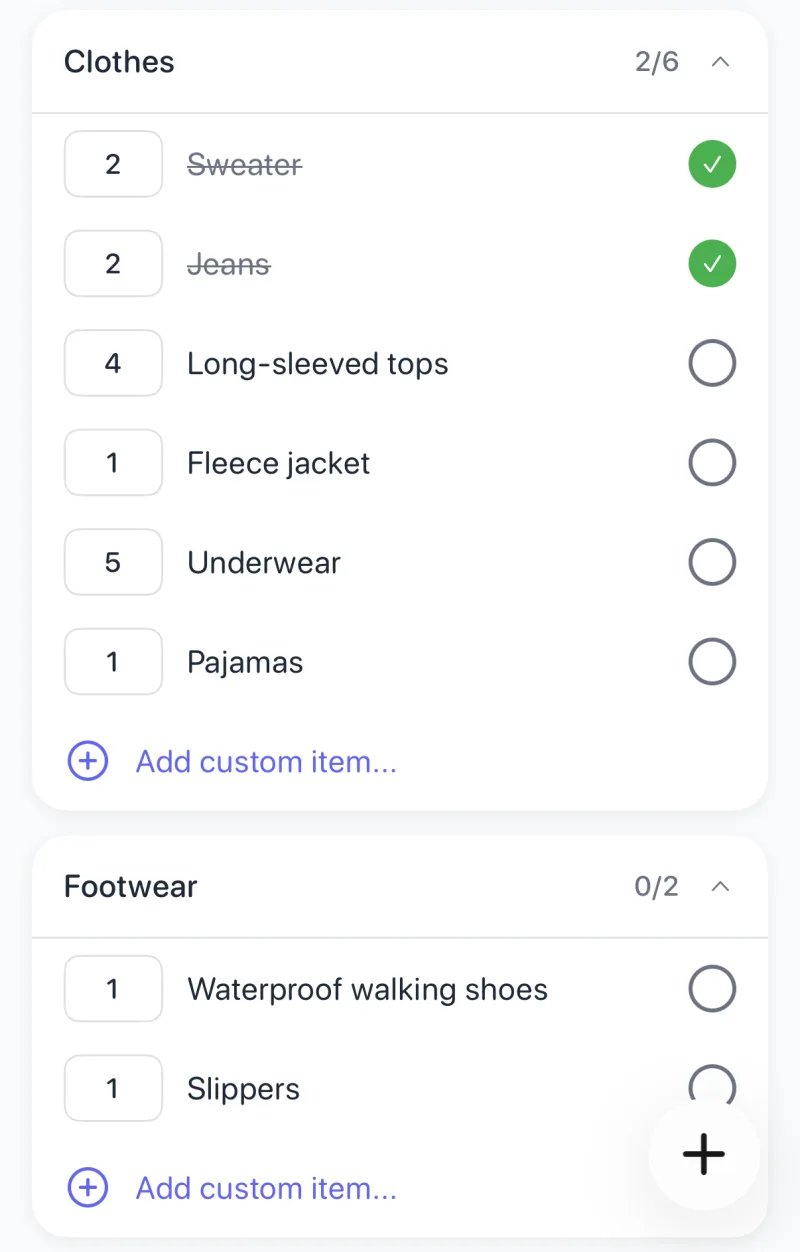
The built-in Winter Travel category has most of this post in it: winter coat, thermal underwear, gloves, winter hat, beanie, scarf, winter boots, wool socks, hand warmers, lip balm, moisturizing lotion and ice cleats. The sweaters, jeans and pajamas are in Clothes, and slippers are in Footwear. Set a quantity on each item, like 5 pairs of wool socks or 6 hand warmers, and check them off as they go in the bag. Anything missing, like the long-sleeved tops or a fleece, you add with the Add custom item row at the bottom of a category.
The trip screen also shows a daily weather forecast for the destination with your trip days highlighted, in °F or °C (you pick the unit in Settings). It only covers the next several days, so it helps most in the final week, when you decide whether the thermals and the ice cleats come along. For a winter trip abroad, the same screen shows the destination's plug type and currency.
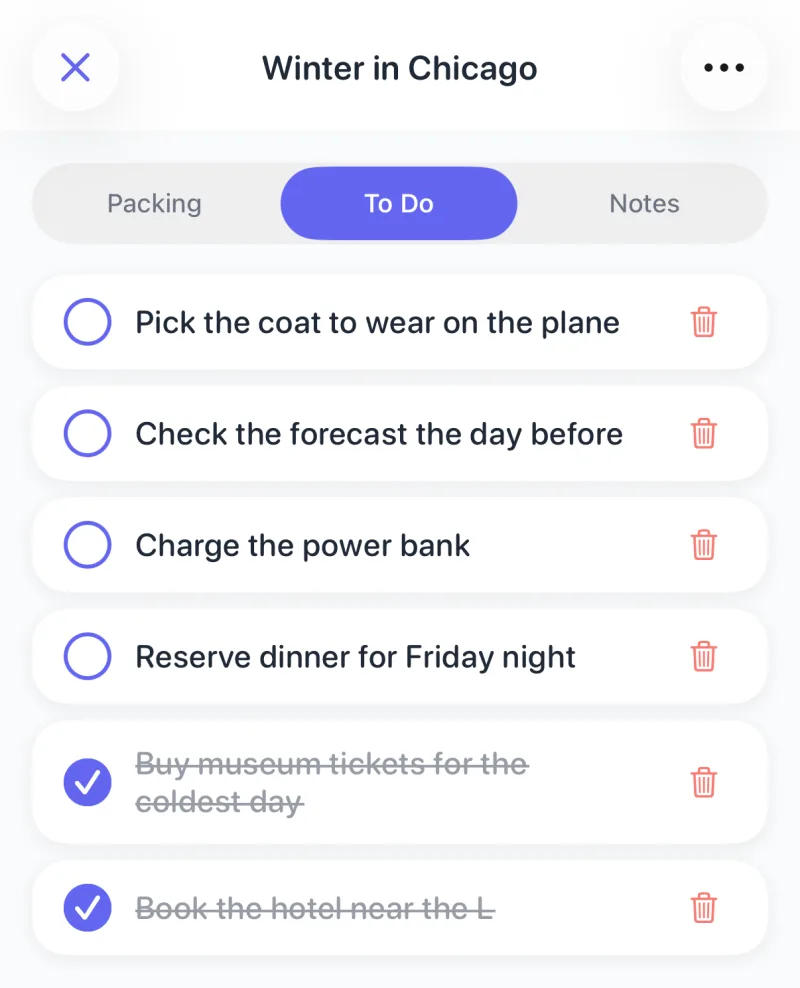
Each trip has a To Do tab for the jobs that are not packing. You write the tasks yourself.
Luggy is free to download. The free version covers one trip with the packing list, quantities, your own items, a to-do list, notes and the destination's weather, plug type and currency. Luggy+ adds unlimited trips, copying a past trip for next winter, reusable custom lists, packing reminders and PDF export.
Luggy: packing list app
Build a packing list for each trip from 250+ ready-made items in 25 categories, check things off as you pack, keep a pre-trip to-do list, and see your destination's plug type, currency and weather. Free to download.

Last check before you go
Coat and boots on. Hat, gloves and scarf in the coat pockets. Thermals and wool socks in the bag. Lip balm, moisturizer and hand warmers in the day bag. Phone charged, power bank in your carry-on. Then check the forecast one more time and pack for its coldest day.